Zomato Group Ordering.
A frictionless approach to collective food delivery, eliminating the chaos of group coordination and manual bill splitting.
If you've ever ordered food with friends, you already know this problem.
Someone opens their phone. It gets passed around. Everyone forgets their modifications. The bill arrives, and someone has to do math while the food gets cold. The existing Zomato flow wasn't just inefficient — it was killing the joy of a shared meal.
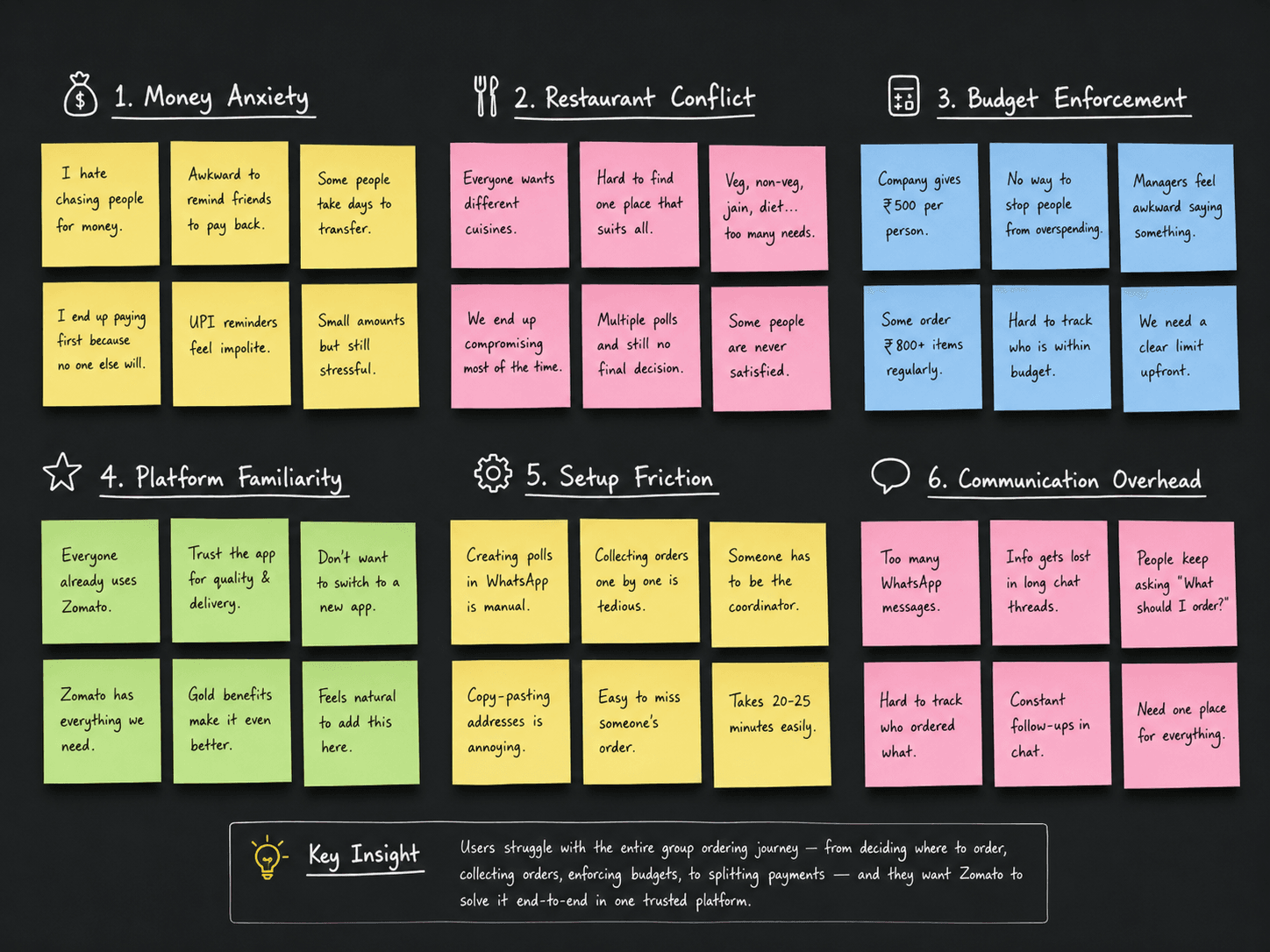
Phone passing causes errors and delays
No visibility into what others are ordering
Dietary constraints are forgotten
Manual bill splitting creates social awkwardness
Competitors solved the cart. Nobody solved the trust.
I audited Swiggy, UberEats, and DoorDash. Competitors either forced cart-sharing links that required app installs, or they lacked integrated payment splitting entirely.
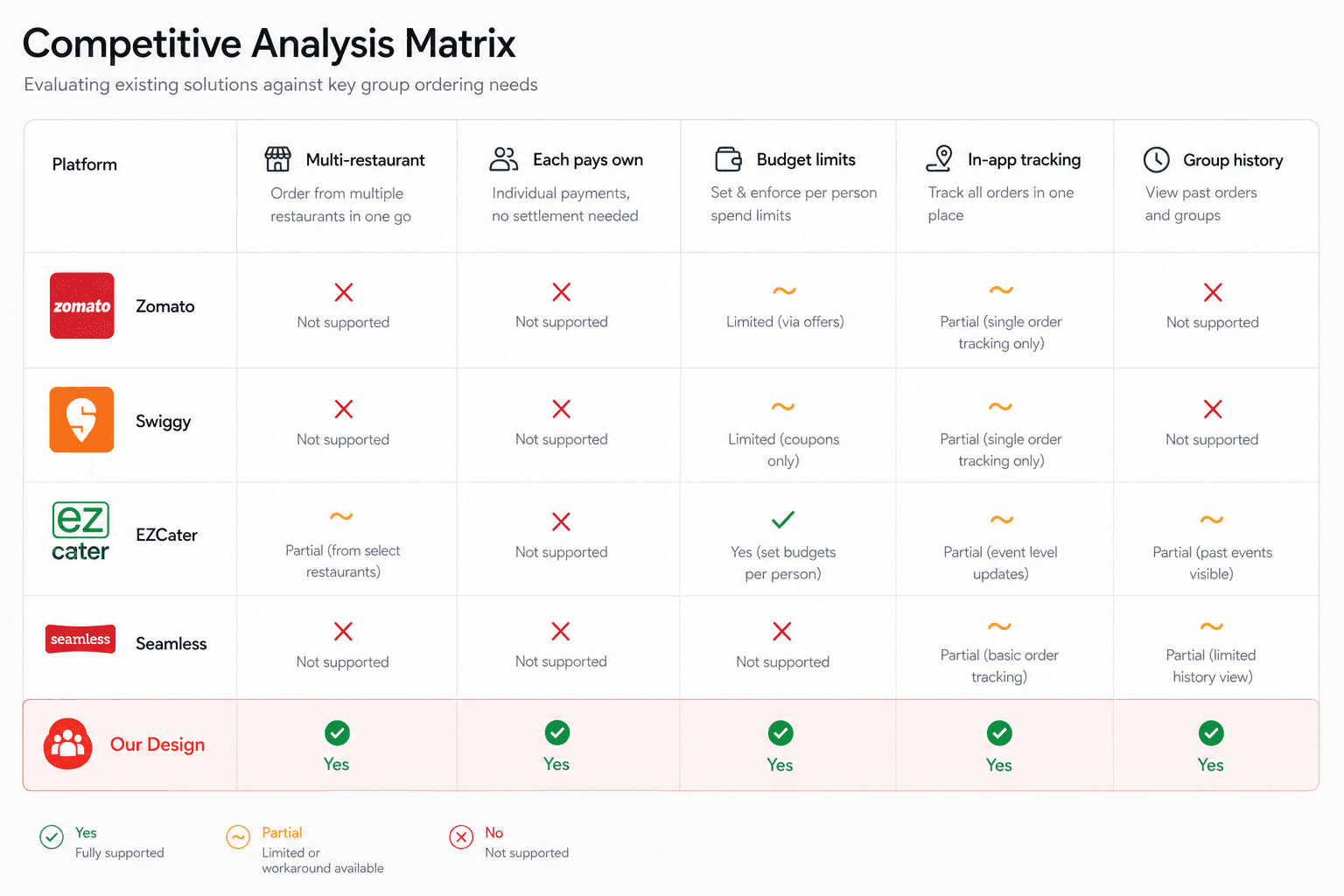
Key Insight
- Trust collapses at the payment stage. If splitting the bill is hard, users abandon the group order entirely and place individual orders.
Decoupling the cart from the device was the unlock.
I restructured the cart flow to introduce a Host and Guest model. Hosts control checkout. Guests add items from their own devices via a deep link. The cart syncs in real-time across all sessions.
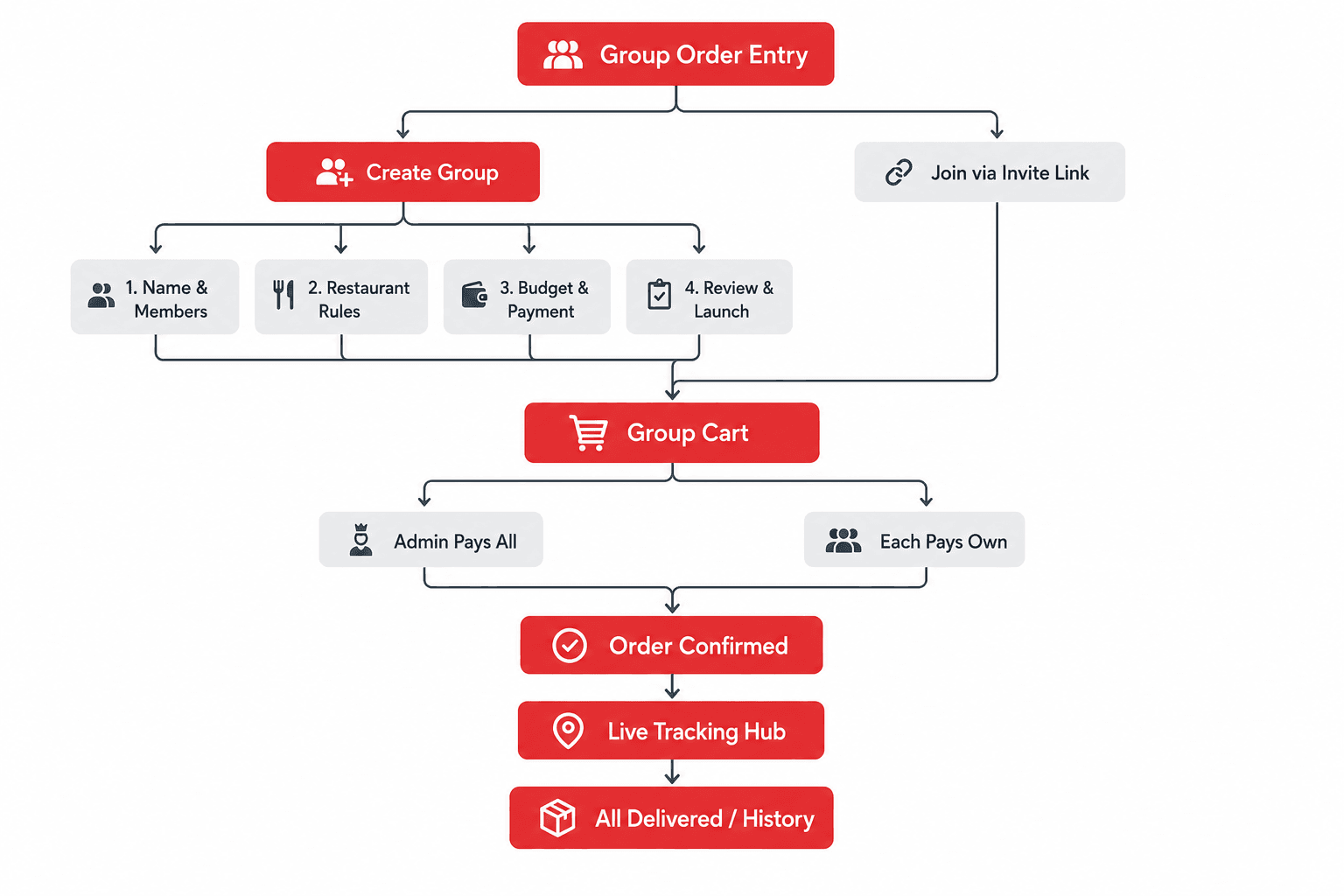
Hosts control checkout and delivery.
Guests join via deep link — no install needed.
Real-time cart sync across all devices.
Automatic proportional bill splitting.

The hardest part wasn't the UI. It was mapping human behavior — trust, awkwardness, generosity — into software states.
Forcing app installs kills group features. Guest web-views via deep links drove our 96% adoption rate.
What happens if a guest leaves? Designing graceful degradation for state failures was the real engineering challenge.
Live cursors and real-time updates in the cart weren't flair — they proved to the group the system was working.